
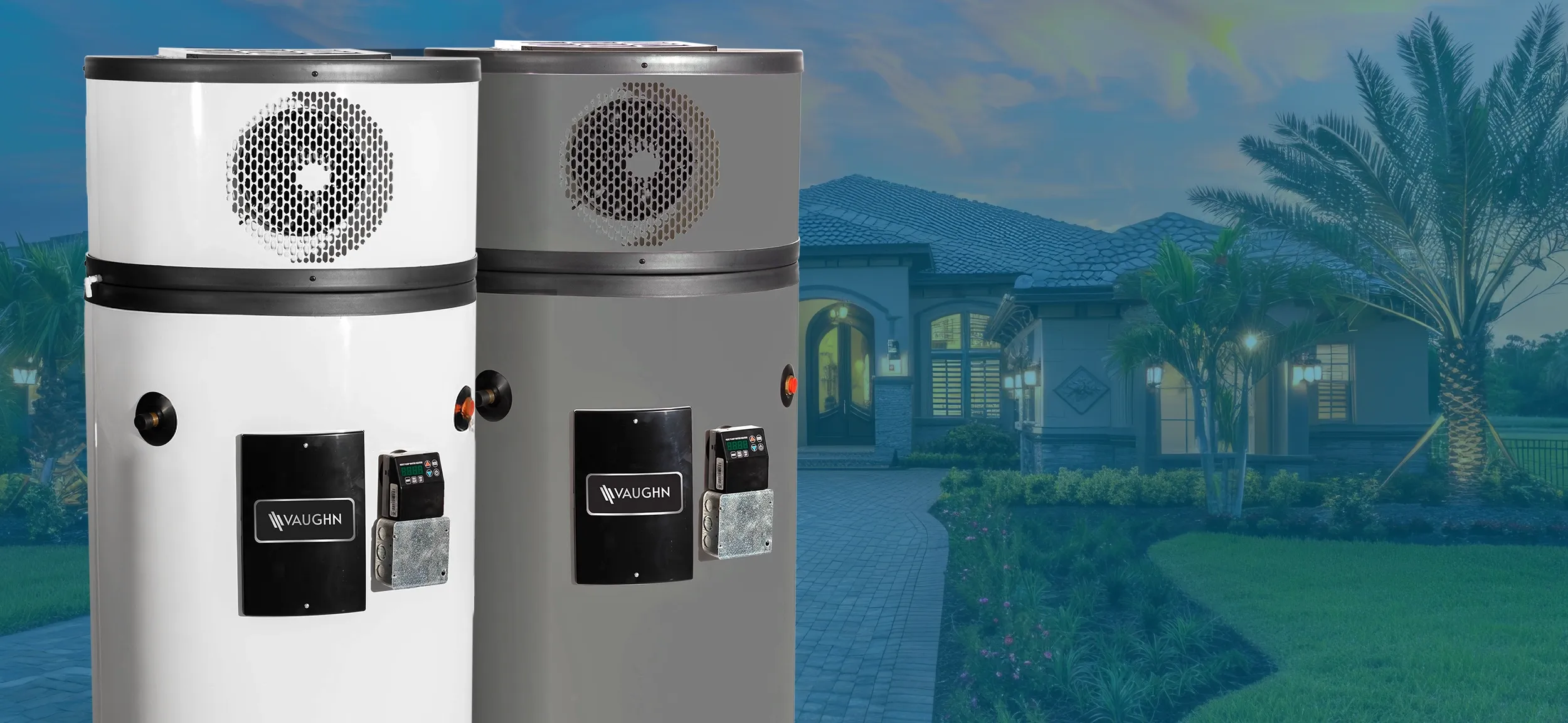
Energy costs continue to increase, prompting many to look for alternative ways of efficiently heating water. While there are many ways to do this, one technology stands out as a reliable, cost-saving alternative: heat pump water heaters. Rather than heating water using fuel or electricity, these heaters capture heat from the surrounding air and transfer it to water. Today, we’ll learn more about how air-to-water heat pumps operate, and we’ll also look at how they measure up against conventional alternatives.
How Do Heat Pump Water Heater Systems Work?
The easiest way to explain heat pumps is to imagine how a refrigerator works, but in reverse. A refrigerator removes heat from the inside and releases it into the kitchen, while a heat pump does the exact opposite. With a few relatively simple steps, it captures heat from the ambient air and then transfers it to a water storage tank. Let’s take a closer look at this process:
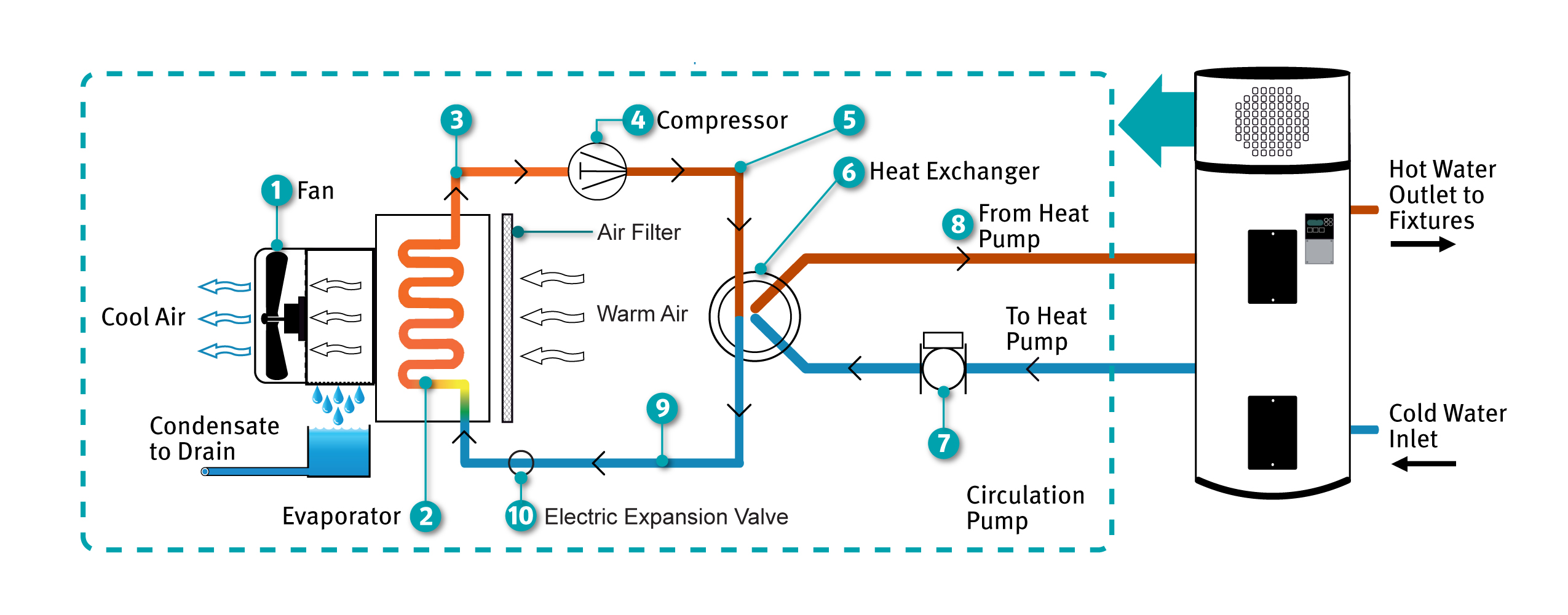
- The built in fan draws air from the room into the water heater heat pump compartment, across an evaporator coil, and exhausts cooler and slightly dryer (dehumidified) air.
- The evaporator coil captures heat energy in the air and transfers that energy to a specially formulated, CFC free refrigerant contained within the evaporator.
- The refrigerant changes from a liquid/gas mixture to 100% vapor as it gets warmer.
- The refrigerant, now entirely vapor, exits the evaporator and passes into a compressor.
- The vapor is compressed, causing it to become a superheated hot gas and then flows to the heat exchanger.
- The heat exchanger transfers heat energy from the superheated hot gas to the cold water from the tank.
- The pump circulates cold water from the tank through the heat exchanger in the upper unit, resulting in a continuous transfer of heat energy from the superheated gas to the water.
- Hot water exits the heat exchanger and is stored in the tank.
- The superheated gas condenses back to a liquid.
- The liquid refrigerant expands when passing through the expansion valve, becoming a vapor/liquid mixture, and then waits to repeat the process.
How Do Heat Pump Heater Differ from Conventional Systems?
Heat pump systems represent a hybrid water heating technology that works differently than traditional systems such as boilers, gas heaters, and electric water heaters. Here’s how they compare:
Traditional Boiler Systems – these heat water by burning natural gas, oil or propane. One major drawback to their operation is that boilers need venting, which might not be ideal for all locations, and can present safety risks. Conventional water heaters are also susceptible to fluctuating prices of natural resources, which can be unpredictable.
Conversely, heat pump water heaters do not use combustion and therefore can work in just about any indoor space. They are incredibly efficient as well. While boilers run at 80-98% efficiency when measured as a Coefficient of Performance (COP), heat pumps can deliver 200–350% efficiency!
Electric Water Heaters - electric water heaters are relatively simple, but effective. They use two resistance heating elements inside of an insulated tank to heat the water. While this process is reliable, heat pumps edge out electric heaters in terms of energy efficiency.
Benefits of Heat Pump Water Heaters
There are additional advantages to heat pump water heaters other than energy savings.
Reduced operating costs: heat pump systems offer 2-4 times higher efficiency when compared to electric systems.
Financial incentives: there are many programs available through organizations such as AHRI and Energy Star that offer rebates or tax credits to help reduce installation costs. Many states and utility companies may offer additional assistance depending on location.
No gas emissions: making them much more environmentally friendly.
Long Lasting: heat pump heaters, such as our HydraStone and Thermoplastic lined models, will provide years of reliable service.
As energy costs continue to rise and sustainability goals become more pressing, heat pump water heaters offer a proven and practical solution for efficient water heating across many applications.
Looking to learn more about heat pump heaters? Check out our Featherweight HP or Hydrastone models, both designed for exceptional reliability and longevity. If you’re not sure which model is best for your needs, contact us today.