
What Is Water Quality?
The universally agreed definition of water quality is “the chemical, physical and biological characteristics of water, usually in respect to its suitability for a designated use.” There are four classifications of water quality: Potable, Palatable, Contaminated, and Infected; for this post, we will be referring to potable water—the water we drink, cook, and clean with. In other words, the water that comes out of our faucets. In the U.S., 85%-90% of household water is supplied by a municipal water treatment facility. The water these facilities deliver to our homes, after it’s treated, comes from reservoirs and underground aquifers. This water must meet both federal and state safety standards, including the 1972 Clean Water Act.
Potable water goes through testing and treatment, but because water comes from different sources geographically, it may fall into several categories.
Let’s look at a few water quality categories and how they affect a water heater.
Hard Water
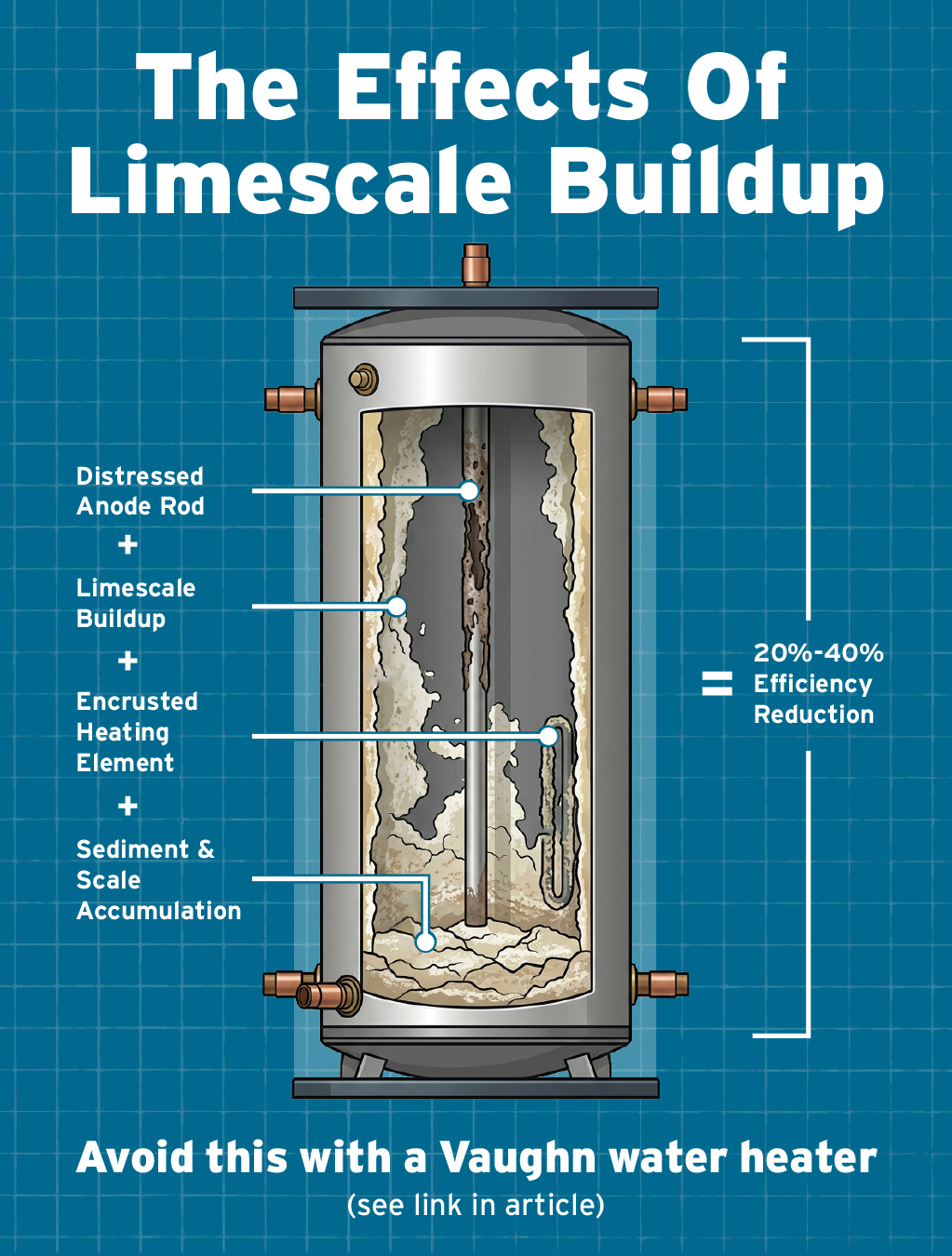
Hard water is a very common issue, especially in the Central and Northern states. It is typically found in areas that use groundwater that has been in contact with rocks and minerals. This causes higher levels of calcium and/or magnesium. In a water heater, these minerals will crystallize and become scale that builds up on the heating elements and tank interiors. When critical internal components are covered, they force the heater to work harder and use more energy than needed. Energy losses can range between 20-40%. Scale can also lead to problems with water flow and pressure.
Corrosive Water
Highly acidic water, or water with high levels of chlorine/chloramine, is considered corrosive water. You likely remember learning about pH in school. If not, here’s a quick refresher. It represents the measure of acidity or alkalinity on a scale of 0-14. The higher the number, the more alkaline. Ideally, drinking water should have a pH of 6.5-8.5.
There are three ranges of acidity for water:
Acidic: 0-6.9 is highly corrosive
Neutral: 7.0 is balanced, pure water
Alkaline: 7.1-14 is water with a bitter taste
Acidic and alkaline water can attack pipes and water heaters, causing them to corrode. The problem is that these conditions lead to leaks and other issues. If the water contains high concentrations of dissolved solids or chlorine, this will accelerate corrosion even further.
Sediment Buildup
Sediment and rust particles can also be present in municipal water. When these get into the water heater, they usually accumulate at the bottom of the tank. This reduces holding and insulating capacities. It can also lead to bacterial growth or create noise when the sediment heats up.
Avoiding Water Quality Headaches
There are several things that can be done to help avoid water quality issues. These include:
Routine Water Testing – many regions offer free or low-cost testing that measures hardness, pH, total dissolved solids, and iron content.
Water Treatment – if water quality issues are present, there are treatment options such as water softeners, whole home filters, and pH adjustment systems.
Routine Maintenance - annual inspections, sediment flushing, and routine component checks can extend the life of a water heater regardless of water quality. Most water heaters are glass-lined steel tanks. The glass lining has tiny pinholes (known as holidays) and it’s susceptible to cracks over time. Water quality of any sort will eventually cause corrosion and rust of the steel tank. For this reason, glass-lined water heaters have what’s called a “sacrificial” anode rod. The anode rod reacts more vigorously to the water, corroding itself first before the corrosion reaches the steel tank. However, anode rods gradually become too corroded and need to be replaced.
Water Neutral Engineering
A reliable way to avoid water quality issues is to install water heaters unaffected by water quality. Vaughn specializes in Water Neutral Engineering through our proprietary HydraStone Cement and Featherweight Thermoplastic lining.
The Vaughn HydraStone Series: lined with a proprietary cement that provides full seamless coverage at a minimum of ½ inch thickness, 100 times thicker than glass.
The Vaughn Featherweight Series: built from polybutene and polypropylene material, resists corrosion and stays water-quality neutral.
Our Featherweight units deliver lasting performance and are lightweight, making transport and installation much easier. Vaughn water heaters don’t need an anode rod, making them virtually maintenance-free and—most importantly—crust-free.
Conclusion
Water quality is a critical factor for a well-functioning and durable water heater. Therefore, it’s important to understand and manage water quality or avoid issues altogether with Water Neutral Engineering. When doing so, you can save thousands in energy, repair, and equipment costs over time.
Looking to minimize water heater maintenance headaches and avoid frequent anode replacements? Our HydraStone Series and Featherweight Series offer a solution that resists corrosion and “says no to the anode”. Click here to contact us with questions or to get a quote.